1. There are lots of rooms in the 13-Story Treehouse. Which one is your favorite? What type of rooms would you include in your own treehouse?
and yes, they would recommend it!
How does Bob feel about the phrase “man’s best friend,” which he heard on a TV show he watched with Ivan? Why does that phrase make him so angry?
Discuss how Bob's early experiences in life shaped his personality.
What does Bob mean when he says, “When you’re an animal, it helps to be a
realist”? (p. 32)
Compare Bob’s character with Ivan’s. How were their early
lives different and how were they similar? Why do you think Ivan was so
accepting of Bob sleeping on his stomach when he first came to the mall?
Discuss the difference between Bob’s friendship with Ivan
and Ruby and his interactions with Minnie and Moo, the guinea pigs, and Nutwit,
the squirrel. Why does he dislike Snickers, the poodle?
According to Bob, what are the biggest differences
between dogs and humans? What is the one human feature that he says he would
find very useful?
Why does Bob hate to walk past the animal shelter?
Describe his feelings about the animals he can hear in the shelter. What does
he mean when he says, “. . . the shelter harshes my mellow.”? (p. 77)
Compare Bob’s stories about his conversations with
Droolius, when he was a stray, and with Kimu the wolf, when he visits the zoo.
How does Bob feel about their different environments and their interactions
with humans?
Describe Bob’s impressions of the zoo and the animals that live with his friends Ivan and Ruby. What does he mean when he says he is considered “enrichment” at the zoo? (p. 102)
Why doesn’t Bob like Kinyani?
Why has Bob never told anyone the secret that haunts him? Why does he think he is really a coward?
Describe the ways in which Bob shows
bravery at the zoo after the tornado and at the animal shelter later.
How does Ruby come up with the idea to save the baby gorilla Kudzoo?
Why do the other elephants allow Ruby to go with Bob to find
Ivan? Why does Bob call Ruby “wise beyond her years”? (p. 191)
Why hasn’t Bob told any of his animal friends about
Boss? Why did he not look for her on the highway? What does he mean when he
says, “There’s a certain freedom that comes with owning your faults”? (p. 234)
Compare Boss’s experience of the last several years to
Bob’s. How has her life experience affected her feelings about people? What
does Boss mean when she says, “I’ve had to forgive myself plenty, just, you
know, to get through the day”? (p. 256) Why is it so hard for Bob to forgive
himself?
Why does Bob go to look for Boss’s puppy? What does he mean when he says to Ivan, “I let her down once, and now, well, I have a second chance”? (p. 290)
What is the bravest thing Bob does in his rescue of Rowdy?
How have Bob’s feelings about people changed throughout this story?
If the author writes another story about this group of animals (a Ruby story or one about Kimu, perhaps?), do you think you will read it?
Please rate this book between 1 and 5, with 1 being the worst and 5 the best.
-2 Fives!
For February's Grades 3-4 Book Club, we read the book Charlie and the Chocolate Factory by Roald Dahl. Alex and Emily was present. Here's what we discussed!
Who does Charlie live with? Where do they live?
What does he get as his only birthday present? And why does he eat it so slowly?
What would have happened if Charlie hadn't found a Golden
Ticket? How would he have survived?
What role does Grandpa Joe play in Charlie's life?
Is it strange that no one ever comes out of Willy Wonka’s factory?
Tell me a little bit about the other 4 ticket winners: Augustus
Gloop, Veruca Salt, Mike Teavee and Violet Beauregarde.
Which is the worst offense: being gluttonous (eating too
much), greedy, spoiled, or lazy? Which of those do you relate to the most? (No
one's judging – we're all guilty of something!)
Do you think that Roald Dahl believes that the parents
of the contest participants are good?
How do the kids react when they are in the factory?
In what ways does Willy Wonka tempt the children to misbehave?
What can one tell about Willy Wonka's character? Is he
likable and kind, or sneaky and cruel?
What is the Oompa-Loompas' purpose in the novel?
How does the theme of karma play a role in the story?
What will Charlie be like as the factory owner? Will he let
children come explore, or keep it closed to the public?
If you could create a candy – any candy in the world – what
would it taste like and what other effects would it have? Go crazy; it doesn't
have to be rooted in reality. Willy Wonka certainly isn't.
Which would have been the most fun room in the factory to explore? Why?
Would you call the end of the book a happy one? Why or why not?
Would you read the sequel to this book, Charlie and the Great Glass Elevator?
Please rate this book between 1 and 5, with 1 being the worst and 5 the best.
-2 Fives!
Charlie and the Great Glass Elevator by Roald Dahl
Last seen flying through the sky in a giant elevator in Charlie and the Chocolate Factory, Charlie Bucket's back for another adventure. When the giant elevator picks up speed, Charlie, Willy Wonka, and the gang are sent hurtling through space and time. Visiting the world’' first space hotel, battling the dreaded Vermicious Knids, and saving the world are only a few stops along this remarkable, intergalactic joyride.
Masters of Disaster by Gary Paulsen
Roped into wacky attempts to break world records, imitate scenes from books, and other inspired ideas, Riley and Reed follow their fearless leader Henry into the wilderness, the bull-riding ring, a haunted house, a cataclysmic collision with explosive life forms, and off the roof of a house on a bike.
Secrets at Sea by Richard Peck
In 1887, the social-climbing Cranstons voyage from New York to London, where they hope to find a husband for their awkward older daughter, secretly accompanied by Helena and her mouse siblings, for whom the journey is both terrifying and wondrous as they meet an array of titled humans despite their best efforts at remaining hidden.
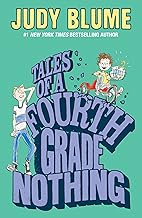
For January's Grades 3-4 Book Club, we read the book Tales of a Fourth Grade Nothing by Judy Blume. Alex and Emily was present. Here's what we discussed!
How does Peter get a pet turtle?
How does Peter’s mother react to his new pet?
Why doesn’t Peter’s mother want him hanging around the park alone?
Why doesn’t Peter like Sheila very much?
What happens to Fudge when his mother leaves him with Sheila, Peter and Jimmy Fargo?
What did Sheila write on the report that upset Peter and Jimmy?
What is Peter’s dad doing on the day Fudge and Peter were at the office?
What was Peter’s father’s idea to get Fudge to ride the Toddle-Bike? And, did it work?
What day will Peter never forget?
Why do you think Fudge decides to swallow Dribble?
Do you think Peter sees the puppy as his reward for being a good kid? Does it make up for all he's been through?
Why does Peter need boundaries from Fudge? Is it only to protect his stuff?
Do you think that Mr. and Mrs. Hatcher treat Fudge better than they treat Peter? Why or why not?
How does living in New York City make Peter's childhood unique and interesting?
Why does Mrs. Hatcher always seem to take Fudge's side over Peter's?
What do we learn about how Peter's parents really feel about him vs. what he thinks they feel about him?
Do you think events like those in the book could ever happen? Why or why not?
Would you call the end of the book a happy one? Why or why not?
Would you read the sequels to this book? It is a series.
Please rate this book between 1 and 5, with 1 being the worst and 5 the best.
The BFG by Roald Dahl
Kidsnatched from her orphange by a BFG (Big Friendly Giant), who spends his life blowing happy dreams to children, Sophie concocts with him a plan to save the world from nine other man-gobbling cannybull giants.
The Frog Princess by E.D. Baker
After reluctantly kissing a frog, an awkward, fourteen-year-old princess suddenly finds herself a frog, too, and sets off with the prince to seek the means--and the self-confidence--to become human again.
Ragweed by Avi
Ragweed, a young country mouse, leaves his family and travels to the big city, where he finds excitement and danger and sees cats for the first time.
One-Third Nerd by Gennifer Choldenko "Fifth grade is not for amateurs, according to Liam. Luckily, he knows that being more than one-t...